


A Pragmatico AI Adoption & Transformation Case Study
How 29 Leaders at CPA Firm Katz, Sapper & Miller Transformed with AI During Tax Season

Challenge
Katz, Sapper & Miller had already rolled out ChatGPT Enterprise firmwide, but adoption was shallow and wildly uneven. The firm needed proof that AI could change how senior tax partners worked, so they chose to test it during the worst quarter on the calendar: 60-80 hour tax-season weeks.
Outcome
Pragmatico ran a 12-week program built around three escalating training levels, each followed by a peer use-case sharing session to turn skill-building into habit. CEO Tim Cook sent the kickoff email himself, attended every session, and checked the usage leaderboard while CPE accreditation and tax/audit-specific use cases removed the two most common reasons a partner says no to training.
HEADQUARTERS
Indianapolis, Indiana
INDUSTRY
CPA & Advisory
EMPLOYEES
~750
TIMELINE
12 Weeks
The Results
What 12 Weeks Produced During Peak Filing Season
79%
Leaders Using AI Daily
$1M+
Annual time savings from AI
174
Saved Per Week (29 leaders)
Adoption & Usage: Before and After
METRIC
BEFORE (Jan 2026)
AFTER (Mar 2026)
Daily AI Usage (multiple times/day)
~50% of leaders
79% of leaders
Avg. Self-Rated Proficiency
4.1/ 10
5.9 / 10 (+44%)
Hours Saved Per Week
2-3 hrs/person
avg. 6 hrs/person
Custom GPT usage (Enterprise)
22%
52% (+136%)
Projects feature usage (Enterprise)
19%
76% (+300%)
Monthly messages per person
166
334 (+101%)
Annualized productivity value
$300-400K
$1M+
The Challenge
From January through March, a CPA firm has no slack. Partners bill 60 to 80 hours a week, filing deadlines stack up, and non-client work gets pushed to May. That is the window Katz, Sapper & Miller chose to put 29 senior leaders through Pragmatico’s 12-week AI Culture Catalyst program.
The timing was deliberate. KSM had already made the platform investment, rolling out ChatGPT Enterprise firmwide. What the executive team wanted to know was whether AI could change the way senior tax partners actually worked, and the best test was to run it when their calendars were at their worst. If the value held up during filing season, it would hold up in any quarter.
The starting point left plenty of room to move. Pre-program survey data from 25 leaders put average self-rated AI proficiency at 4.1 out of 10. About a third were using ChatGPT daily, most of them in short bursts for simple tasks, saving 2 to 3 hours a week. Everyone had a license. Few had built AI into the work that filled their days, and nobody had shown a tax partner billing 60-hour weeks what it could do for the specific work in front of him.
Rob Backus, KSM's CTO, had been watching the pattern for a year. He rated himself 9 out of 10 and was saving 10 to 15 hours a week, which put him at the far end of a wide internal range. The variable had nothing to do with technology, since everyone had access to the same tool. The gap was structural, and it started at the top. What Rob asked Pragmatico for was behavioral change that would cascade down through a firm targeting an ambitious revenue growth target by 2030.
The Solution
CEO Tim Cook and COO Jamie Ellis set the timeline before the program was designed: first session by the end of January, complete by the end of March. That put all six sessions inside tax season, on purpose.
PHASE 1.1
Align & Architect (Weeks 1–3)
CEO Tim Cook emailed every participant personally. The language was clear: full participation was required. He committed to showing up himself and framed the cohort as the firm's most influential leaders, whose learning would ripple through their teams and across the firm. When the CEO puts his own calendar on the line in February and tells you this matters, the signal travels fast.
KSM's AI Program Lead was embedded as internal coordinator alongside Pragmatico's delivery team. Her first move mattered more than its size suggests. She secured CPE credit for every session, so the hours partners spent in the program counted toward their CPA continuing education requirements. In a profession where every hour is either billable or accountable, that one decision removed the most common reason a partner says no.
An AI Vision Working Group formed with the CEO, COO, CTO, and Chief People Officer to co-create the firm's AI Vision. The COO pushed the group straight into the hardest question in the room: "Will AI replace my job? We are pretty affirmative that no, it won't. Can we truly say this?" Surfacing that openly, rather than letting it circulate in hallway conversations, set the tone for everything that followed. The resulting vision committed to training and equipping people before measuring them, and it was honest about how roles would evolve.
PHASE 1.2
Activate Behaviors (Weeks 4–12)
The next phase spanned six sessions across 12 weeks: three training levels and three use-case sharing sessions, each level building on the last. Level 1 covered the COSTAR prompting framework, custom instructions, and a 30-day habit challenge replacing Google searches with ChatGPT. Level 2 moved into Projects, Deep Research, Outlook integration, and departmental use case identification. Level 3 reached custom GPTs, Agent Mode, and automating workflows.
After each training level, a use-case sharing session required participants to demonstrate how they had applied AI to their own work: skill building, then applied practice, then peer accountability. That sequence is what builds habits.
A usage leaderboard tracked engagement and surfaced competitive energy across the cohort. Tim Cook checked it regularly. CTO Rob Backus demoed his own custom GPT live in the Level 3 session.
All of this ran through peak filing season. 24 leaders in the cohort maintained daily ChatGPT usage during that stretch.

"Super-psyched for tomorrow. Yes, tension is high given deadlines, but we need to push forward."
Jamie Ellis
COO, Katz, Sapper & Miller
PHASE 1.3
Operationalize & Sustain (Weeks 12+)
The AI Vision and Manifesto document was finalized for firmwide communication. KSM designed an AI recognition program to celebrate adoption in line with firm values. The IT team began building an AI Hub on KSM’s intranet to centralize resources firmwide. The AI program lead and IT embedded as the firm's permanent internal AI adoption infrastructure, so the program's gains would compound rather than decay.
Use cases
Breakthrough Use Cases
Here's what 12 weeks of AI transformation looks like in practice:
Result
TIME SAVED
5 Hrs Per
Week
DEPARTMENT |
Tax
Custom GPT filtering daily state and local tax updates from multiple sources, paired with weekly team AI coaching
Result
TIME SAVED
Recurring
DEPARTMENT |
Finance
Automated conflict check for investment independence: loads statements and the restricted list, produces a compliance memo
Result
TIME SAVED
Hours →
Minutes
DEPARTMENT |
Tax
Deep Research resolved a technical tax dispute and produced the most efficient meeting the team had ever had
Result
TIME SAVED
4-6 Hrs Per
Week
DEPARTMENT |
C-Suite
Custom GPT aggregating strategic plans across departments, enabling cross-functional priority queries
Breakthrough Transformations
Jamie Ellis
Jamie started at 4 out of 10, using AI a few times a week for Excel formulas. By the end he was using it multiple times daily and had built a custom GPT aggregating strategic plans from every department, which he queries for cross-functional priorities and uses to decide where he needs to be involved.

GPTs and agents are a huge help and time saver. I use AI as my Chief of Staff. It helps me evaluate my calendar and work tasks and challenges me as to whether I should be as heavily involved in different areas.
Jamie Ellis
COO, Katz, Sapper & Miller
Legal. KSM’s chief legal officer was spending 45 to 60 minutes drafting each corporate resolution, pulling from governing documents and structuring the language manually. He uploaded the governing documents to ChatGPT and had it produce structured resolutions in a fraction of the time. Across his workload, he now saves 15 hours a week.
Tax. One tax partner entered the program at 1 out of 10 proficiency and zero hours saved. His breakthrough was a client records task that had been taking about an hour, which ChatGPT handled in 15 minutes. He finished using AI daily and saving 8 hours a week.
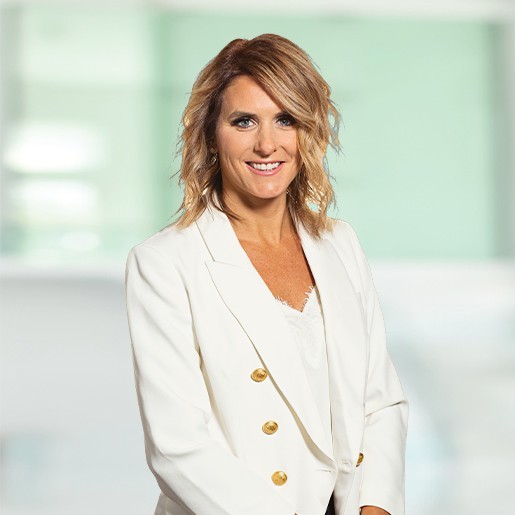
Erin Eberly
A tax partner was already a daily user at baseline but without much depth, saving 3 to 5 hours a week. By the end, she had tripled that to 10 to 15 hours a week and turned ChatGPT into an executive thought partner for structuring communications, refining messaging, and pressure-testing decisions.
I have begun using ChatGPT as a thought partner to structure executive communications, refine messaging, and pressure-test decisions in my role as Tax PIC, improving clarity and speed of leadership output.
Erin Eberly
Partner, Katz, Sapper & Miller

The Critical Insights:
Why This Worked
- They Chose the Hardest Possible Timing
Tax season at a CPA firm means 60 to 80 hour weeks for months. Running the program during that window was a deliberate stress test by KSM's executive team. If partners will adopt a new way of working while they are already underwater, the value is real. 24 leaders maintained daily usage through peak filing, which is what people do when they find genuine time savings and choose to keep going.
- The CEO Went First
Tim Cook did not delegate AI adoption to IT or HR. He sent the kickoff email himself. He participated in every session. He checked the usage leaderboard. When the program assigned homework, he did the homework. Partners at a CPA firm take their cues from what the CEO does, and Tim made his commitment visible at every stage. By the end, 79% of the cohort was using AI multiple times daily.
- The Program Was Built for How CPAs Actually Work
CPE accreditation on every session turned program hours into credit hours. Sessions were scheduled around filing deadlines. Use cases came out of tax, audit, and advisory work rather than generic business examples. For a partner weighing whether to spend 90 minutes away from a return in February, each of those decisions removed a reason to skip.
- Peer Proof Outperformed Mandates
Every training session was followed by a session where participants demonstrated what they had actually built. In KSM's culture, positive recognition and peer sharing moved adoption faster than a mandate would have. When one partner showed colleagues how he cut an hour of client record cleanup to 15 minutes, and another demonstrated corporate resolution drafting that used to take an hour, the motivation became intrinsic. Nobody wanted to be the only person in the room without a use case to share.
- Platform Data Verified the Self-Reports
The trained cohort's ChatGPT Enterprise message volume grew 101%, from 166 to 334 messages per person per month, while the untrained rest of the firm grew 56%. Custom GPT usage went from 22% to 52% for the trained group against 14% flat for the untrained. Projects adoption went from 19% to 76% against 8% flat. Every depth metric moved for the cohort and stayed flat for everyone else, which makes this platform-verified behavioral change.
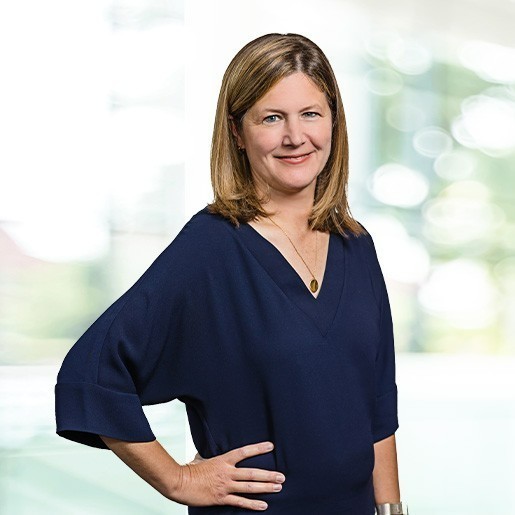
"I don't know what I'd do without AI now!"
Jennifer Moore
CMO, Katz, Sapper & Miller
What's Next:
From AI-Deployed to AI-Adopted
COO Jamie Ellis brought the results to the Executive Committee the week Phase 1 wrapped. Six expansion pathways are under discussion: horizontal expansion to every partner in the firm, vertical depth taking one business unit through all three levels, tying AI adoption to a strategic KPI, embedding the AI Adoption Lead and IT deeper into a combined consulting and internal model, building a use case library from Phase 1 wins so new cohorts start with proven peer playbooks, and an executive committee workshop on incentivizing AI-driven efficiency inside a billable-hour model.
75% of the Phase 1 cohort asked for more training for their teams. That demand came from within.
Twelve weeks, 29 leaders, and more than $1M in annualized productivity value. Those leaders now save a combined 174 hours a week. The firm ran the entire program through the worst quarter on its calendar, on purpose, because it wanted to know whether the value would hold up under pressure.
"Pragmatico has been an exceptional partner in helping our firm build real, practical capability with ChatGPT. They worked closely with a group of 30 internal leaders and delivered a program that was not only educational, but highly engaging and accountable.What stood out most was their focus on application. They didn’t just teach concepts—they pushed us to develop strong prompting skills, explore projects, build GPTs, and understand agent mode in a way that we could immediately bring back into our day-to-day work. The homework assignments were thoughtful and reinforced learning, and their use of group usage reports created a level of accountability that drove real adoption across the team.
Their responsiveness was outstanding. They maintained an active Teams channel where questions were answered quickly, both during and outside of scheduled sessions. It created a continuous learning environment rather than a one-time training event.Michael Vasey led the majority of our sessions with clarity, energy, and deep expertise, while Santi Jaramillo remained highly engaged throughout, demonstrating strong leadership and commitment to our success. Every session was well-prepared, and the use of breakout groups made the experience interactive and valuable for everyone involved.
Overall, Pragmatico delivered a high-impact program that has meaningfully advanced our firm’s AI capabilities. I would strongly recommend them to any organization looking to move beyond theory and drive real adoption of AI tools."
Their responsiveness was outstanding. They maintained an active Teams channel where questions were answered quickly, both during and outside of scheduled sessions. It created a continuous learning environment rather than a one-time training event.Michael Vasey led the majority of our sessions with clarity, energy, and deep expertise, while Santi Jaramillo remained highly engaged throughout, demonstrating strong leadership and commitment to our success. Every session was well-prepared, and the use of breakout groups made the experience interactive and valuable for everyone involved.
Overall, Pragmatico delivered a high-impact program that has meaningfully advanced our firm’s AI capabilities. I would strongly recommend them to any organization looking to move beyond theory and drive real adoption of AI tools."
Jamie Ellis
COO, Katz, Sapper & Miller

We help mid-market companies turn AI investments into measurable business value.